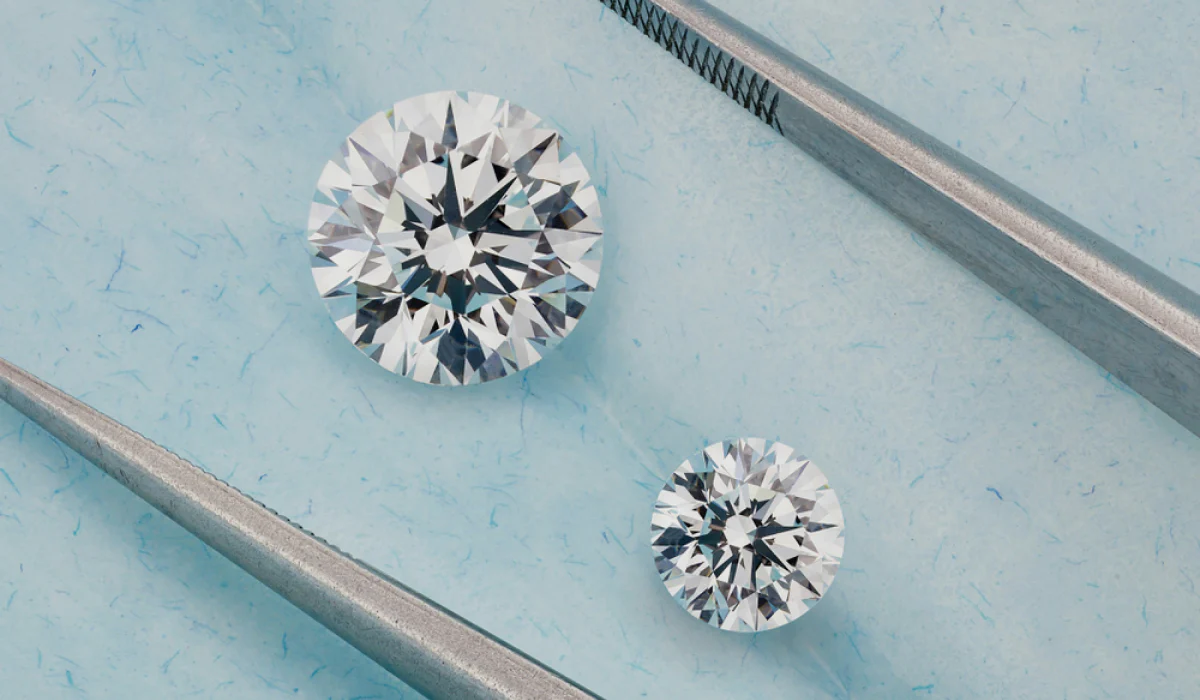
Lab Diamond Clarity Chart 101: What Buyers Really Need to Know

Clarity sounds straightforward, but once you dive into all those letters, numbers, and microscopic imperfections, it’s easy to feel like you’re decoding an alien language. And when you’re shopping for lab made diamonds, clarity becomes one of those things that seems tiny but actually affects how your diamond sparkles, how much it costs, and how confident you feel wearing it.
So yeah, it matters.
More than most people think.
Section 1: A Little Backstory (And a Reality Check)
Think about it for a second: the first time someone buys a diamond—lab or natural—they usually focus on size.
It’s human nature. Bigger looks better, right?
But then the salesperson whips out a loupe and a lab diamond clarity chart, and suddenly you’re staring at a very tiny dot that apparently has a big impact on the price tag.
Kind of funny, kind of stressful.
Here’s the thing. Clarity isn’t about flawlessness in some poetic “nothing is perfect” way. It’s literally about tiny marks formed as the diamond grows. In natural diamonds, these come from millions of years of pressure. In lab made diamonds, they come from the high-tech processes that mimic that environment.
Does one look more “real” than the other?
Nope. The inclusions are different, but the sparkle?
Just as real. Sometimes better.
And let’s be honest—most inclusions are invisible to the naked eye anyway.
Yet somehow we obsess over them.
Section 2: So What Are Your Options? (A Friendly Breakdown)
Here’s where things get interesting.
Clarity isn’t just “good or bad.” It’s more like a vibe scale for your diamond’s personality.
Below is the human-translated version of the lab diamond clarity chart categories:
- FL / IF (Flawless / Internally Flawless)
No inclusions. Super rare. Super pricey. Also… unnecessary for most people. - VVS1 / VVS2 (Very, Very Slightly Included)
Tiny inclusions you’ll probably never see even if you try really hard. Kind of the sweet spot for “perfection without overpaying.” - VS1 / VS2 (Very Slightly Included)
Most people can’t spot anything with the naked eye. This is where savvy shoppers usually hang out. - SI1 / SI2 (Slightly Included)
Small inclusions, sometimes visible, sometimes not. Depends on the diamond. Some SI stones are insanely good value. - I1+ (Included)
You’ll probably see the imperfections. Not terrible, but definitely a “know what you’re getting” situation.
Here’s something most people don’t tell you:
Not all clarity grades look the same in real life. A VS2 can look cleaner than a VVS2 if the inclusion is well-hidden.
That’s why clarity charts matter, but your eyes matter more.
Trends worth knowing:
- More buyers are choosing VS2 and SI1 for bigger carat sizes.
- Lab created diamonds with VVS clarity are way more affordable than their natural counterparts.
- People want sparkle, not perfection on paper. (Amen.)
Some friendly advice:
- Don’t choose clarity before you choose shape—some shapes hide inclusions better.
- Don’t let anyone shame you into “higher clarity = better.” That’s marketing.
- If budget matters, clarity is the easiest C to compromise on without losing visual beauty.
Section 3: The Local Angle (Or Why This Matters Depending on Where You’re Buying)
Here’s something you might have noticed depending on where you live:
Some cities care way more about status grades, while others care more about size or sparkle.
For example, in places like New York, Hong Kong, Singapore, and London, people love comparing diamond specs like they’re test scores. Meanwhile, in trendier cities like Los Angeles or Melbourne, shoppers care more about design and sustainability.
And this is where lab made diamonds totally change the game.
They give you:
- Higher clarity for your budget
- Bigger carat sizes without the “uh oh, that’s my entire paycheck” feeling
- The ability to shop ethically and luxuriously
People want jewellery that actually feels like them, not something chosen because a salesperson told them the inclusion “breaks the symmetry of the light return.” (Yes, that is a real phrase someone used once. Still funny.)
Lab diamonds make it easier to choose based on preference, not pressure.
Section 4: How the Buying Process Works (But Less Boring)
If you’ve ever tried buying a diamond and felt like you needed a PhD halfway through, here’s a simpler way of looking at it:
1. Start with the vibe.
Do you want classic? Flashy? Minimalist? Artsy?
This affects shape, and shape affects how much clarity actually matters.
2. Peek at the lab diamond clarity chart.
You don’t need to memorize it. Just know your comfort zone—VS2, SI1, VVS1… whatever feels right.
3. Look at actual videos or photos.
Honestly, this matters more than the grade.
Two diamonds with the same clarity can look totally different.
4. Decide what you’re willing to pay for.
If a VVS1 and a VS1 look the same to your eyes?
Congrats. You just saved money without sacrificing beauty.
5. Think long term.
Are you choosing for daily wear? Special occasions? Heirloom vibes?
For daily wear, go for eye-clean over “perfect on paper.”
6. Trust your reaction.
When you see the diamond, you’ll know.
People think it’s cheesy, but it’s true.
And if a diamond looks amazing but has a tiny inclusion buried in a corner?
That’s called a “smart buy,” my friend.
Conclusion
At the end of the day, the lab diamond clarity chart isn’t there to confuse you—it’s there to help you understand your options. And when it comes to lab made diamonds, clarity becomes even more interesting because you get so much more flexibility, beauty, and value than most people expect.
So don’t stress the tiny stuff. Pick what looks beautiful to your eyes, choose what fits your style (and budget), and enjoy the sparkle you end up with.